
Call an HVAC contractor when you notice a persistent musty smell, visible mold near vents, unexplained allergy or asthma flare-ups indoors, condensation building up on windows, or a carbon monoxide alarm sounding. These signs often point to problems filters alone cannot fix. An HVAC company can pinpoint whether the cause is ventilation, humidity, or a mechanical fault. At Comfort Plus, LC Heating and Cooling, we treat sudden air quality changes as a signal to inspect your system promptly, not wait.

What Warning Signs Point to an Indoor Air Quality Problem?
Most air quality problems build up slowly, then show up as several symptoms at once. Watch for:
- A musty or stale odor that returns after cleaning
- Visible mold on vents, ceilings, or window frames
- Allergy or asthma symptoms that worsen indoors and ease outside
- Condensation collecting on windows or cold pipes
- Dust that resettles quickly after cleaning
If two or more of these show up together, it usually means HVAC repair is needed rather than another round of cleaning. Our team at Comfort Plus Heating & Cooling starts every visit by ruling out combustion safety issues first, then works through ventilation and humidity.
When Is Carbon Monoxide a True Emergency?
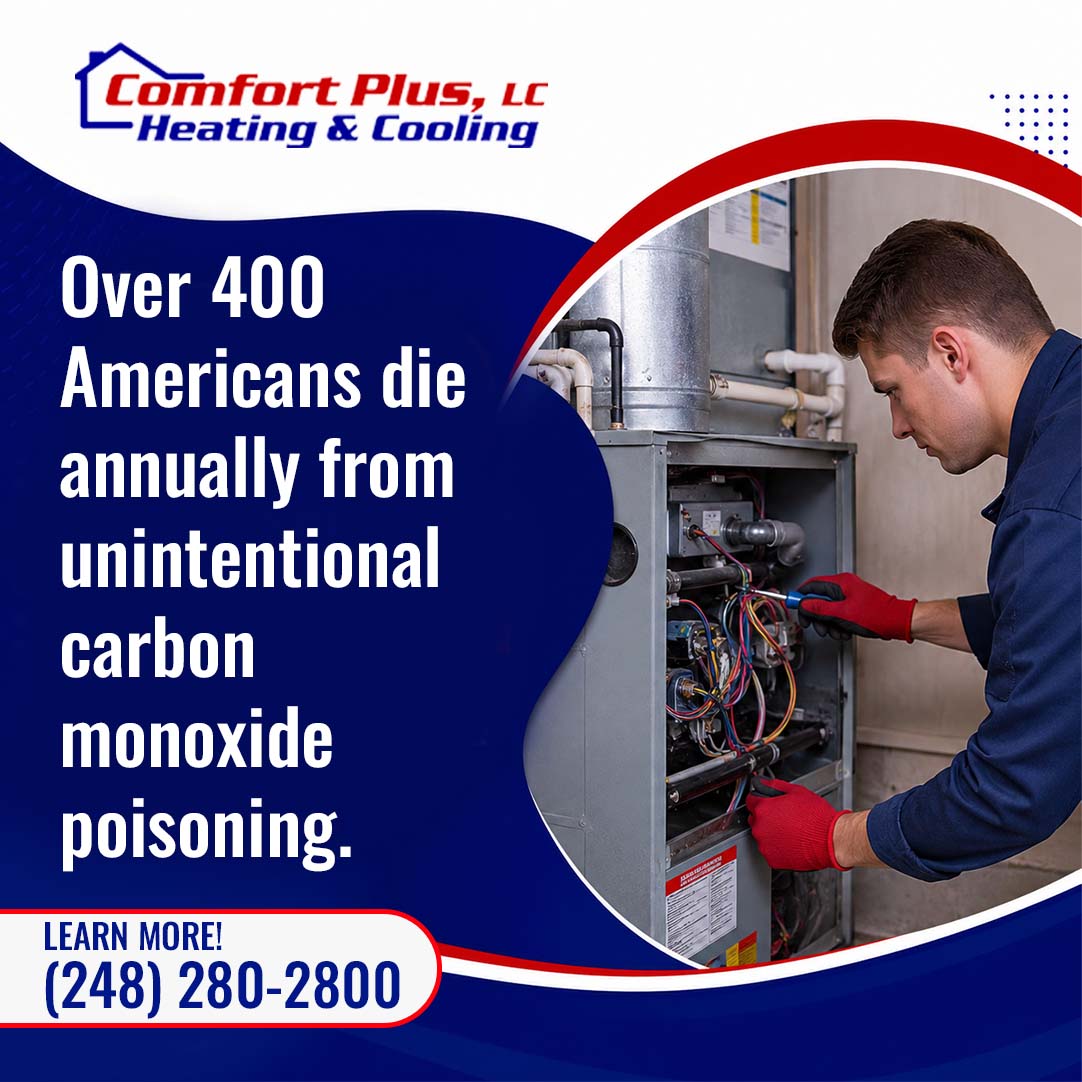
Carbon monoxide requires immediate action, not a scheduled visit. Per CDC data, more than 400 Americans die each year from unintentional carbon monoxide poisoning, over 100,000 visit an emergency department, and more than 14,000 are hospitalized.
If a carbon monoxide alarm sounds, get everyone outside right away, call 911, and only then contact HVAC contractors to inspect furnaces, water heaters, and other combustion equipment before anyone re-enters the home.
How Do You Know If Mold or Humidity Needs Professional Help?
The U.S. Environmental Protection Agency recommends keeping indoor relative humidity below 60 percent, ideally between 30 and 50 percent, since mold needs moisture to grow.
If a hygrometer stays above that range even with a dehumidifier running, or mold keeps returning after cleaning, the issue is likely mechanical: a ventilation gap or humidity control failure needing HVAC repair in Troy, MI, rather than a bigger bottle of cleaner.
Homeowners and business owners throughout Troy, along with nearby Berkley, Clawson, and Birmingham, tend to call us for these warning signs rather than routine tune-ups, since older ductwork and basement humidity in this area make mold a recurring concern.
Which Signs Call for Same-Day Service Versus a Routine Visit?
Not every air quality issue needs a same-day technician. This table sorts common signs by urgency.
| Sign | Urgency | Recommended Action |
| Carbon monoxide alarm sounding | Emergency | Evacuate, call 911, then an HVAC company |
| Visible mold near vents or ductwork | Priority | Schedule a professional assessment within days |
| Sudden spike in allergy or asthma symptoms | Priority | Request a filter and duct inspection soon |
| Musty odor without visible mold | Routine | Book an inspection within a week or two |
| Window condensation in winter | Routine | Monitor humidity and schedule a check |
What Should You Do Before the Technician Arrives?
A few simple steps make the visit faster and more accurate:
- Note when symptoms started and whether they change by room or time of day
- Avoid running air fresheners or heavy cleaning products beforehand, since they can mask the source
- Keep pets away from the units being inspected
- Have your thermostat and any smart humidity sensor readings handy
Frequently Asked Questions
-
Should I turn off my HVAC system if I suspect a carbon monoxide leak?
Yes. Turn it off if it’s safe to do so, evacuate immediately, and call 911 before contacting a technician.
-
Can air quality problems come back after one professional visit?
Yes, if the underlying moisture or ventilation issue wasn’t fully corrected. A follow-up check confirms the fix held.
-
Does homeowners insurance typically cover mold-related HVAC repair?
It depends on the policy and the cause. Sudden water damage is often covered, while gradual humidity buildup usually isn’t.

Don’t Wait Out a Warning Sign
Waiting on a warning sign usually costs more than acting on it early. Our team at Comfort Plus Heating & Cooling can tell you quickly whether it’s a quick fix or something that needs a technician on-site.
Call us today at (248) 280-2800 or email info@comfortpluslc.com if you’re noticing any of these warning signs.