
Cooling performance in your home depends on the condition and design of your air conditioning system. At Comfort Plus, LC Heating & Cooling, we see many homeowners in Troy dealing with higher utility bills, uneven temperatures, and older units that no longer meet daily cooling needs. A properly planned air conditioning installation directly impacts how efficiently your home stays comfortable during warmer months.
We provide air conditioning service and installation for homeowners who want consistent cooling and lower energy use. We focus on system selection, load calculations, and installation practices that match your home’s requirements. When we handle an AC installation, we evaluate your current setup and recommend solutions based on capacity, efficiency ratings, and long-term performance expectations. This blog explains how high-efficiency systems work, when replacement makes sense, and what to expect during installation so you can move forward with a clear technical understanding.
Definition of High-Efficiency Systems
A high-efficiency system is an air conditioning unit with a higher SEER (Seasonal Energy Efficiency Ratio) rating that measures cooling output against energy use. SEER values help compare how much cooling a system provides for each unit of electricity consumed. Higher ratings reflect improved energy performance in residential applications.
How It Differs from Standard Air Conditioning Installation
A high-efficiency air conditioning installation uses modern components that reduce energy consumption while maintaining steady cooling performance. These systems use updated compressors, variable-speed motors, and improved coil designs that support more controlled airflow throughout the home.
Standard air conditioning systems rely on older fixed-speed technology. That means the system turns on and off more frequently, which increases energy usage and creates uneven indoor temperatures. We see this pattern often in homes with aging equipment, especially during long cooling cycles.
High-efficiency systems operate with smoother adjustments in output. This helps maintain more consistent room temperatures without constant cycling. You also see lower electricity usage because the system adjusts performance based on cooling demand rather than running at full capacity every time it activates.
Why Homeowners Upgrade to High-Efficiency AC Systems
Homeowners choose high-efficiency AC systems to reduce energy use and improve indoor temperature stability. Energy consumption becomes a major factor for households that run cooling systems for long hours during warm seasons. These systems also support lower long-term maintenance needs compared to aging equipment. Older units tend to require more frequent servicing as internal components wear down over time.
Lower Energy Consumption
High-efficiency systems reduce electricity use compared to older air conditioning units. This difference comes from improved compressors and better airflow control that reduce wasted energy during operation.
This reduction varies based on home size, insulation, and usage patterns. Homes with better insulation and updated ductwork often see more stable reductions in energy use compared to older homes with airflow restrictions.
Improved Indoor Comfort
High-efficiency AC installation maintains consistent airflow and temperature balance across different rooms. This results from systems designed to regulate cooling output more evenly throughout the home.
This reduces uneven cooling, especially in multi-level homes. Upper floors and rooms far from the main unit receive more balanced airflow, which reduces temperature differences across living spaces.
Reduced Repair Frequency
Newer AC systems experience fewer mechanical issues due to updated components and improved design standards. Modern units are built with parts that handle load cycles more efficiently during long cooling periods.
Older systems tend to fail more often due to worn parts and reduced efficiency. Frequent cycling and extended use place added stress on compressors, fans, and electrical components over time.
High-Efficiency Air Conditioning Installation Process
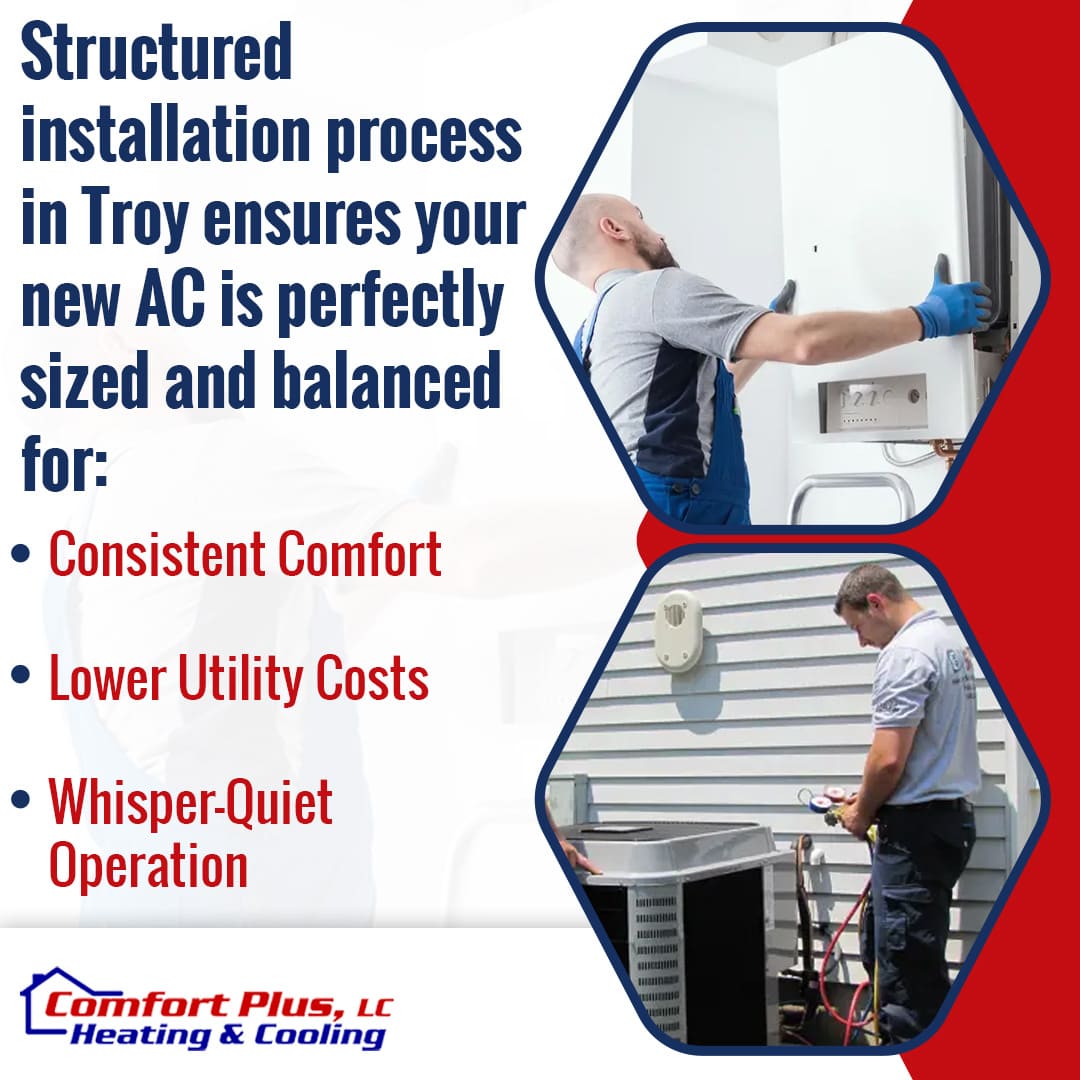
A high-efficiency installation follows a planned sequence that aligns equipment performance with the cooling needs of a home. Each stage supports proper airflow, correct sizing, and steady system operation over time.
Home Evaluation and Load Calculation
Load calculation determines the cooling capacity required based on square footage, insulation quality, window placement, and room layout. This step aligns system size with the actual cooling demand of the home.
Accurate load calculation prevents installing units that are too large or too small. Oversized systems cycle frequently, while undersized systems struggle to reach set temperatures, affecting comfort and energy use. Technicians also review structure and airflow patterns to set a proper baseline for system planning.
System Selection
System selection matches the cooling capacity and SEER rating to the home’s requirements. SEER (Seasonal Energy Efficiency Ratio) reflects how efficiently a system uses electricity to produce cooling.
Higher SEER systems reduce energy demand during daily operation compared to lower-rated units. Selection also considers duct condition, home size, and expected usage patterns. This step connects technical system capabilities with real household cooling needs, helping maintain steady indoor temperature control.
Installation and Testing
Installation connects indoor and outdoor components and activates system operation for evaluation. This stage includes refrigerant line setup, electrical connections, and system calibration.
Testing follows installation to check cooling output, pressure levels, and system response. Technicians monitor performance during startup to confirm stable operation under load conditions.
Thermostat Setup
Thermostat setup defines temperature control settings and daily scheduling functions. This step allows users to set temperature ranges and adjust cooling cycles based on routine activity.
Smart thermostats offer remote control options and basic energy tracking features. Proper configuration helps align system operation with household schedules.
Airflow Testing
Airflow testing measures how evenly conditioned air moves through each room in the home. Balanced airflow helps maintain consistent temperatures across different living spaces.
Technicians adjust dampers and inspect duct performance during this stage. Proper airflow reduces strain on the system and supports steady cooling delivery.
We follow a structured installation process at Comfort Plus Heating & Cooling that focuses on correct system sizing, accurate setup, and steady airflow across the home. Our work in air conditioning installation and service is built around aligning equipment performance with household cooling needs while maintaining reliable system operation.
Comparing Standard vs High-Efficiency AC Systems
Many homeowners look at system differences before planning a new AC installation. This section explains how standard and high-efficiency AC systems perform in everyday home use. The comparison focuses on energy use, cost, lifespan, and temperature control.
| Factor | Standard AC | High-Efficiency AC |
| Energy Consumption | Higher usage | Lower usage |
| Monthly Operating Cost | Higher | Lower |
| System Lifespan | 10–12 years | 15–20 years |
| Temperature Stability | Moderate | High |
At Comfort Plus Heating & Cooling, we evaluate these differences with homeowners in Troy to match system selection with real household usage patterns.
Benefits of Professional AC Installation
Professional AC installation improves system performance by matching equipment specifications with home requirements. Correct installation reduces operational issues and supports long-term efficiency.
Proper Sizing and Setup
Correct system sizing prevents overworking and uneven cooling. System size determines how effectively a unit handles a home’s cooling load. Undersized systems run longer cycles, while oversized units short cycle and create uneven temperatures with added stress on components.
Installation teams calculate load using square footage, insulation, window placement, and room layout. Proper sizing aligns capacity with demand, while ductwork and airflow adjustments support balanced temperature control. Incorrect sizing reduces performance and increases wear, leading to higher maintenance needs over time.
Warranty Protection
Manufacturer warranties require installation by licensed HVAC technicians. Most manufacturers state that certified installation procedures must be followed to meet safety and performance standards for the equipment.
If installation is done without licensed support, warranty coverage can be limited or voided, affecting repair eligibility and replacement parts. Proper installation records are also required during warranty claims. Non-professional installation can void coverage, leaving homeowners responsible for repairs even for manufacturing defects.
Reliable Air Conditioning Service
Routine air conditioning service supports system performance through cleaning and inspections. Service visits usually include coil cleaning, refrigerant level checks, airflow inspection, and thermostat testing. These steps help maintain steady cooling and reduce stress on system components during heavy use periods.
Regular maintenance helps detect early performance changes before they develop into larger system problems. It also supports consistent airflow and helps identify early signs of wear so small issues can be addressed before they affect cooling output or system reliability.
We apply professional installation standards that align equipment selection, sizing, and setup with each home’s requirements. Our work at Comfort Plus Heating & Cooling focuses on correct system installation practices and consistent service so homeowners can maintain stable cooling performance across seasons.
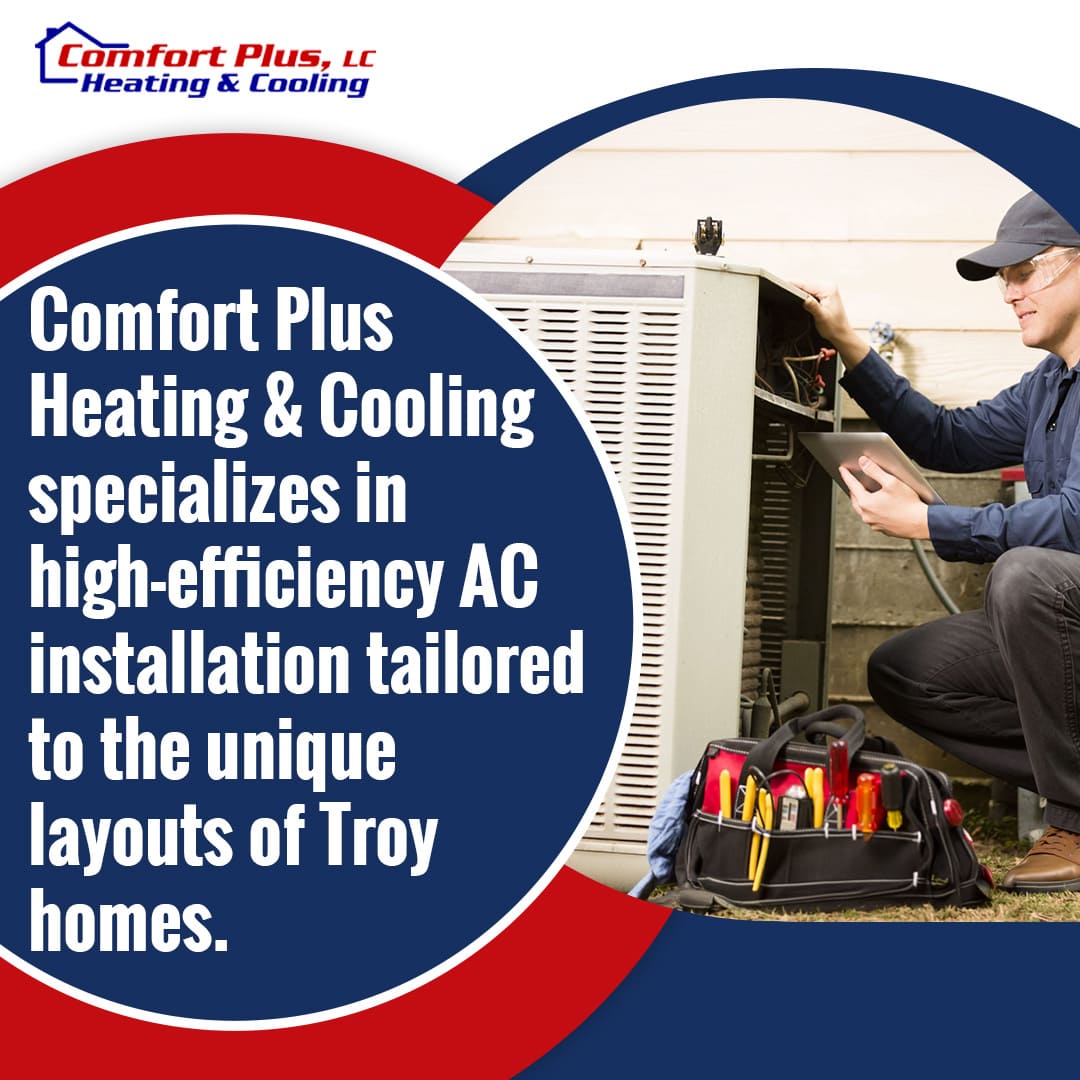
Choosing the Right AC Installation Company in Troy
A qualified AC installation company provides accurate installation and reliable system performance. Proper selection reduces installation errors.
A licensed provider follows established HVAC installation standards that guide safe electrical connections, refrigerant handling, and equipment placement. Technicians trained in these standards apply correct sizing methods and installation steps that match the home’s cooling load. Experience also contributes to consistent system configuration across different home layouts, which reduces the chance of airflow imbalance or early system strain.
Licensing and Experience
Licensed HVAC technicians follow industry installation standards. Experience supports accurate system configuration.
Licensing reflects completion of technical training and compliance with state or local HVAC regulations. Experienced technicians apply that knowledge across varied installation scenarios, including older homes and multi-level structures. This reduces the likelihood of incorrect setup that can affect cooling distribution and system lifespan.
Transparent Pricing
Clear pricing structures provide defined costs before installation begins. This reduces unexpected charges during service.
Transparent pricing allows homeowners to review equipment costs, labor, and additional installation requirements before work starts. It also helps compare system options based on efficiency levels and capacity. This approach supports smoother planning and avoids interruptions during the installation process.
Local Service Availability
Local HVAC providers offer faster response times for installation and repair needs. This reduces downtime during system issues.
Local service coverage allows technicians to reach homes quickly for installation scheduling, follow-up adjustments, and maintenance support. Faster response times also help during system interruptions, especially during peak cooling periods.
We guide homeowners through AC installation choices by focusing on technical accuracy, clear pricing, and dependable service planning. At Comfort Plus Heating & Cooling, we apply these standards to deliver consistent installation and service support across Troy homes.
Why Choose Comfort Plus Heating & Cooling
Comfort Plus Heating & Cooling provides AC installation and service for residential properties in Troy. We work directly with homeowners who need system upgrades, replacements, or new installations based on home cooling requirements.
The company handles installation, maintenance, and repair services for various HVAC systems. We manage full system support so your cooling equipment stays functional across its service life, from setup through ongoing service visits.
Experience and Local Expertise
More than 30 years of HVAC service experience support accurate installation work. We apply this experience during every installation by reviewing system capacity, home layout, and airflow needs before starting any work. This helps align the system with the home’s cooling demand.
Our technicians work with central air units, split systems, and high-efficiency models. We also handle common issues in older homes in Troy, including undersized systems and airflow imbalance, and address them during installation.
24/7 Air Conditioning Service
24/7 service availability provides support during system breakdowns at any time. We respond to service calls day and night, so homeowners avoid long delays during cooling interruptions. Emergency response helps restore cooling during high temperature periods, especially for system failures or weak airflow issues.
Our field team uses diagnostic tools to identify problems on-site and reduce downtime. We also review recurring service patterns to support corrective maintenance steps that help lower repeat breakdowns over time.
Full-Service HVAC Solutions
Full-service HVAC coverage includes installation, repair, and maintenance for air conditioning systems. We manage the complete air conditioning installation process along with follow-up service, so your system performs consistently through seasonal changes.
Our work focuses on correct sizing, refrigerant handling, and airflow balancing. After installation, we provide scheduled maintenance and repair support to extend system life and reduce performance decline. We also keep service records to help track system condition and support future equipment planning.
Get Expert AC Installation and Service Support in Troy
Comfort levels in your home depend on the quality of your air conditioning installation and ongoing air conditioning service. We at Comfort Plus Heating & Cooling support homeowners in Troy with system upgrades, replacements, and maintenance built around accurate sizing and dependable performance. If your current system struggles with uneven cooling or rising energy use, our team is ready to review your setup and recommend a suitable solution based on your home’s requirements.
You can reach us at (248) 280-2800 or email info@comfortpluslc.com to schedule your consultation. We are available to help you move forward with a properly planned AC installation that supports steady cooling across your home.